
That Ain’t It: Boxing Out Brown’s Black Brilliance
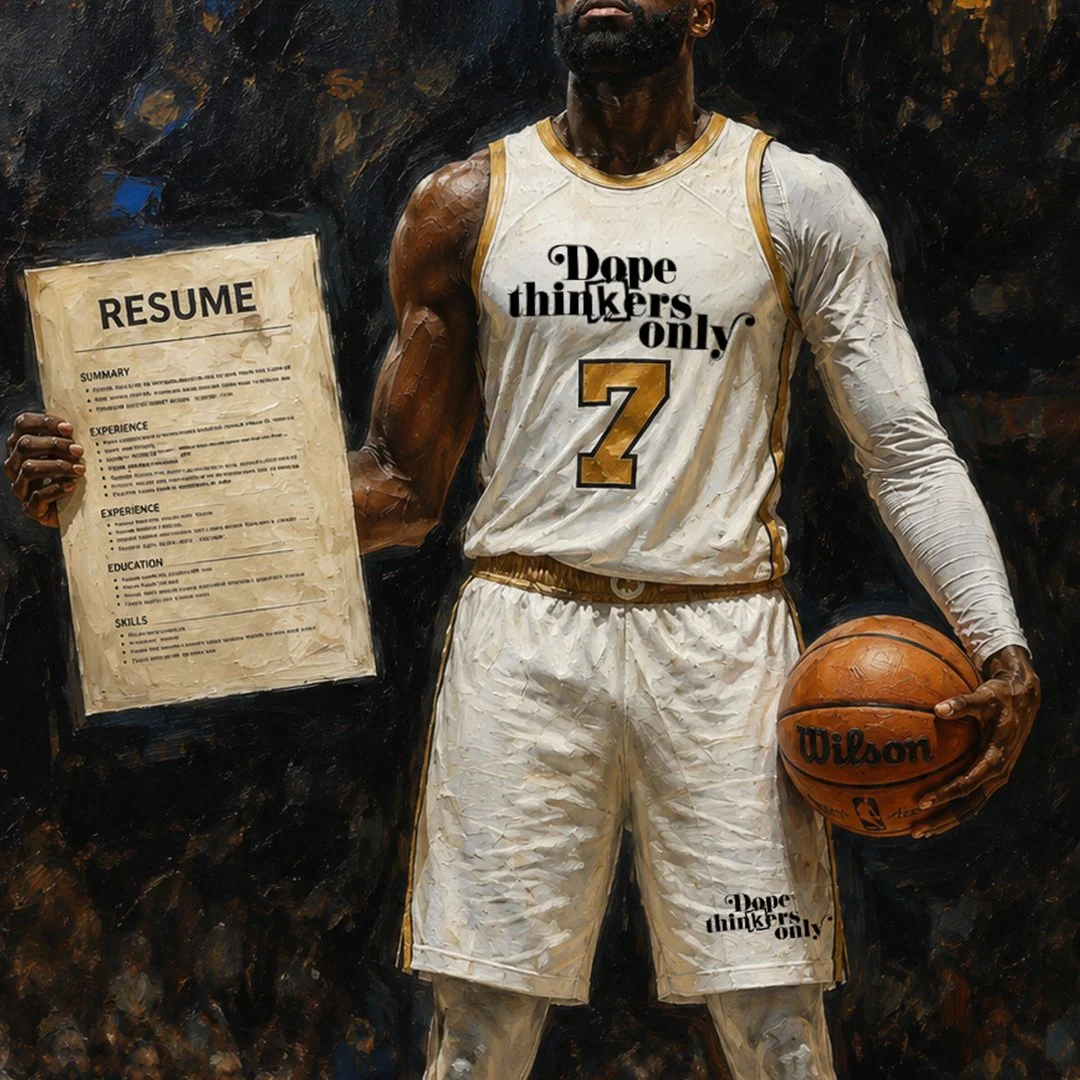
Let’s play a game. Close your eyes and picture an NBA superstar. The Bashing of Brown’s Black Brilliance Beyond Basketball
Now picture that same athlete delivering a lecture at Harvard, collaborating with researchers at MIT, receiving an internship offer from NASA, launching businesses, investing in his community, and speaking thoughtfully about education, economics, and social change.
Now, be honest, how many of you instantly thought, “That doesn’t sound like an NBA player?”
That reaction isn’t random. It reflects decades of cultural conditioning that has shaped what brilliance is supposed to look like — and, more importantly, who is supposed to embody it.
Which brings us to Jaylen Brown.
After Brown’s blockbuster trade from the Boston Celtics to the Philadelphia 76ers, sports commentator Colin Cowherd relayed comments from unnamed NBA sources suggesting Brown “suddenly thinks he’s the smartest guy in every room he’s in.” Brown responded with a line that quickly spread online: “No offense to everybody in sports, but the bar is [expletive] low.”
Predictably, social media did what social media does. Some praised Brown’s confidence. Others called him arrogant, pretentious, or full of himself.
But here’s the thing: this conversation isn’t really about Jaylen Brown.
It’s about why Black excellence, especially intellectual excellence, is so often interpreted as ego instead of achievement. It’s about a society that celebrates Black talent until that talent expands beyond the boundaries it has assigned.
What Happened
Strip away the headlines, and the sequence of events is simple.
Jaylen Brown, a five-time NBA All-Star, NBA champion, and Finals MVP, was unexpectedly traded from Boston to Philadelphia. In the aftermath, Cowherd shared that multiple league sources believed Brown had become convinced he was “the smartest guy in every room.”
Whether those anonymous comments are true is almost beside the point.
What matters is what happened next.
Instead of focusing on Brown’s leadership, championship résumé, or what he brings to Philadelphia on the court, much of the conversation shifted to his intelligence and personality.
Think about that.
Brown attended the University of California, Berkeley, one of the country’s premier public institutions. He became an MIT Media Lab Fellow, was offered an internship by NASA, delivered a lecture at Harvard University, advocated for educational equity, and built business ventures outside basketball.
Those aren’t rumors. Those are accomplishments.
And yet those accomplishments were quickly recast as evidence against him rather than evidence of who he is.
That shift deserves more attention than the trade itself.
Why It Feels Familiar
If this story sounds familiar, that’s because we’ve seen versions of it before.
America has long celebrated Black excellence, provided that excellence stays in the lane where it first appeared.
Dominate on the basketball court? Absolutely.
Break records on the football field? No problem.
Win Grammys? We’ll applaud.
But, speak with authority about economics, technology, politics, education, or business, and suddenly the tone changes.
Brilliance becomes arrogance.
Confidence becomes ego.
Credentials become elitism.
The individual hasn’t changed. Our perception of them has.
This isn’t to say every criticism directed at a successful Black person is rooted in race. That would be impossible to prove and intellectually lazy to claim.
But there is a recurring pattern in American culture: extraordinary Black achievement is often met with an extraordinary burden of explanation. Instead of simply acknowledging accomplishment, people look for ways to diminish it.
Success becomes luck.
Preparation becomes privilege.
Intelligence becomes attitude.
That pattern didn’t begin with Jaylen Brown, and it won’t end with him.
The Pattern
Consider Barack Obama.
Whatever your politics, his academic résumé is undeniable. Yet throughout his presidency, his intelligence was frequently reframed as elitism. Being thoughtful became being “out of touch.”
Being measured became being “professorial,” as though intellectual rigor were somehow incompatible with effective leadership.
Then there’s Michelle Obama: a graduate of Princeton University and Harvard Law School, a successful attorney, bestselling author, and one of the most admired women in the world.
Yet for years, critics attempted to minimize not just her accomplishments but her legitimacy, often reducing an extraordinary résumé to caricature and stereotype.
The pattern extends into sports as well.
LeBron James opened a public school, built a business empire, and invested heavily in storytelling and education. Yet many still told him to “stick to sports.”
Kareem Abdul-Jabbar has spent decades writing thoughtful essays on history, race, politics, and culture, only to be dismissed by people uncomfortable with athletes who refuse to limit themselves to athletics.
And now, Jaylen Brown joins that lineage. Not because he claimed to know everything, but because he refused to pretend he knows less than he does.
The Bigger Issue
The real issue isn’t intelligence. It’s expectation.
For generations, American culture has been comfortable celebrating Black physical excellence while remaining noticeably less comfortable with Black intellectual authority.
Athletes are expected to study playbooks. They’re not expected to quote philosophers.
Entertainers are expected to perform. They’re not expected to shape policy.
Public figures are expected to inspire. They’re not expected to challenge assumptions.
When they do, they’re often accused of thinking they’re better than everyone else.
Notice how quickly excellence gets reframed.
A confident executive is decisive.
A confident Black leader is intimidating.
A successful entrepreneur is visionary.
A successful Black entrepreneur is lucky.
An educated public figure is informed.
An educated Black public figure is arrogant.
Those labels matter because narratives shape perception far more powerfully than facts ever will.
Once someone is branded as difficult, cocky, or elitist, every action gets filtered through that lens.
That’s how narratives work and that’s precisely why they’re dangerous.
Insights for Marketers
At Kulur Group, we often say that brands don’t simply compete through products.
They compete through perception.
Jaylen Brown’s story is a reminder that people don’t evaluate individuals based solely on credentials. They evaluate them through narratives, assumptions, and cultural frames that often have little to do with reality.
The first lesson is that perception often outweighs proof. Brown’s résumé is public, and his academic and professional achievements are documented. Yet one narrative about his personality quickly overshadowed years of demonstrated accomplishment.
The second lesson is that representation expands possibility. Every athlete who embraces scholarship, every entrepreneur who challenges stereotypes, and every leader who refuses to shrink themselves broadens society’s understanding of what excellence can look like.
Finally, marketers should remember that discomfort is not the same thing as arrogance.
Sometimes audiences resist people not because they’ve crossed a line, but because they’ve crossed an expectation.
Those are two very different things.
Final Thoughts
Let’s go back to the beginning.
Picture that NBA superstar again. Now picture Jaylen Brown.
The Harvard lecture.
The MIT fellowship.
The NASA internship offer.
The championship ring.
The Finals MVP trophy.
The entrepreneur.
The community advocate.
The scholar.
None of those accomplishments diminish the others. They reinforce them.
Maybe the most revealing part of this conversation isn’t Brown’s response or Cowherd’s commentary.
Maybe it’s how many people still struggle to reconcile the idea that someone can be both physically exceptional and intellectually formidable.
That’s the real lesson here.
For all our conversations about progress, we still seem surprisingly uncomfortable when Black excellence refuses to fit neatly into a single category.
America has never had a problem celebrating Black talent.
It’s Black brilliance that still seems to make some people pause.
And until intelligence stops being mistaken for arrogance, confidence stops being mistaken for ego, and multidimensional success stops being treated like a personality flaw, we’ll keep having this same conversation under different names, in different industries, and with different headlines.
Because this was never just about Jaylen Brown.
It’s about who we allow to be brilliant without apologizing for it.
And well...
That ain’t it.