
Soundtrack to Impact, Vol. 1: Identity isn't the story you tell. It's what you keep after everything else changes.
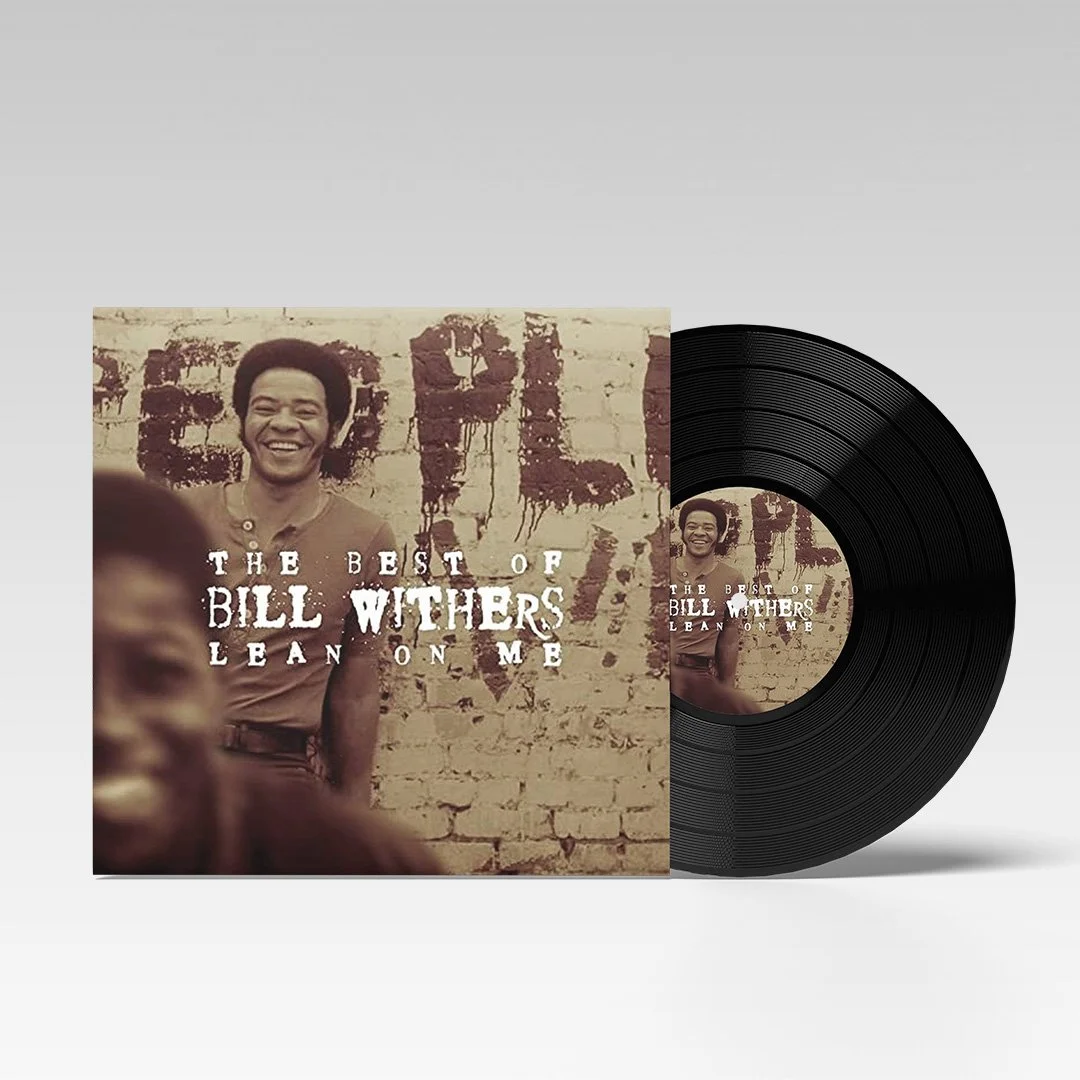
Theme of the Month: Identity
The Song: Lean on me
Artist: Bill Withers
Release date: April 21, 1972
The Story
Bill Withers didn't come to music the way most artists do. He'd spent nine years in the U.S. Navy before working in factories, including an aircraft parts plant, and didn't release his debut album until he was in his early thirties. By the time he wrote "Lean on Me," he'd already left that factory floor behind for Los Angeles, but Los Angeles hadn't given him back what he'd left in West Virginia.
Withers grew up in Slab Fork, a small coal mining town where, by his own account, community wasn't an abstraction. It was survival. Neighbors leaned on each other because there wasn't much else to lean on. When he resettled in L.A. to chase a music career, he found himself missing that ethic — the assumption that someone would show up when things got hard.
The song itself came from an unplanned moment at the piano. Withers had bought himself a small piano and was simply running his fingers up and down the keys when the phrase "lean on me" crossed his mind. He liked how it sat against the chords he'd been playing, and built outward from there. He was deliberate about one thing in particular: keeping the lyrics simple.
There's no elaborate metaphor in "Lean on Me," no clever turn of phrase to admire. It says exactly what it means, which is part of why it still means it fifty-four years later.
He recorded the track in 1972 with several members of the Watts 103rd Street Rhythm Band, adding a string section to round out the arrangement. It became the lead single off his second album, Still Bill.
The Impact
"Lean on Me" entered the Billboard Hot 100 the day after its release and spent 19 weeks on the chart. By July 8, 1972, it had reached No. 1 — Withers' only chart-topping single — where it stayed for three weeks, unseated eventually by Gilbert O'Sullivan's "Alone Again (Naturally)." Billboard ranked it the No. 7 song of the year. It later placed at No. 208 on Rolling Stone's list of the 500 greatest songs of all time, and it's one of just nine songs to reach No. 1 on the Hot 100 in two separate versions by two different artists — Withers' original in 1972, and Club Nouveau's go-go-inflected cover, which returned the song to No. 1 in 1987 and won that year's Grammy for Best R&B Song, with Withers credited as writer.
But chart performance undersells what actually happened to this song. "Lean on Me" didn't stay in 1972. It became one of the small handful of songs that functions less like a piece of music and more like public property — sung at funerals, graduations, protests, and telethons, covered by gospel choirs and pop stars alike, deployed instinctively whenever a community needs to say out loud what it's already feeling. During the COVID-19 pandemic, it resurfaced again as an anthem for essential workers, sung communally in the way songs are sung when words alone aren't enough. Few songwriters live to watch their work get repurposed as a piece of civic infrastructure. Withers did.
What's notable is that the song never needed the artist to stay in the spotlight to keep working. Withers walked away from the music industry entirely in 1985, stopped recording, stopped touring, and by most accounts, never looked back. "Lean on Me" didn't need him to promote it. It had already become bigger than his career which was a rare thing, and a telling one.
The Connection to Identity
Most songs about identity are songs about the self — who am I, what do I want, what makes me, me. "Lean on Me" takes the opposite approach, and that's exactly what makes it a monthly-theme fit rather than an obvious pick.
Withers wrote the song at a moment of genuine identity dislocation. He'd left the place that shaped him (a hometown built on interdependence) for a city that didn't share those values, and he felt the absence immediately. Rather than write a song about missing a place, he wrote a song that tried to rebuild the thing he was missing. That's a specific kind of identity work: not "who am I," but "what do I still carry from where I'm from, and how do I make sure I don't lose it."
There's a lesson in that for anyone building something, whether it's a brand, a company, or a body of work, far from where they started. Identity isn't just the story you tell about yourself. It's the values you insist on keeping even after the environment that built them is gone. Withers didn't perform nostalgia for Slab Fork. He extracted the one principle that mattered most — that people are supposed to show up for each other — and made it portable enough to survive the move.
That's also, not coincidentally, what separates identity from image. An image is what a place, a person, or a brand looks like from the outside. Identity is what survives the relocation, the rebrand, the platform change, the industry shift, and/or the thing you'd keep even if you had to start over somewhere unfamiliar tomorrow. Withers proved his by writing four minutes of music simple enough that it never needed explaining, and true enough that it never stopped being sung.
Fifty-four years on, "Lean on Me" isn't remembered because it topped a chart for three weeks in the summer of 1972. It's remembered because Withers made one truth portable enough for anyone to carry.