
The Death of the Big Four · Part IV of IV: The Rise of the Hyper Niche Creative
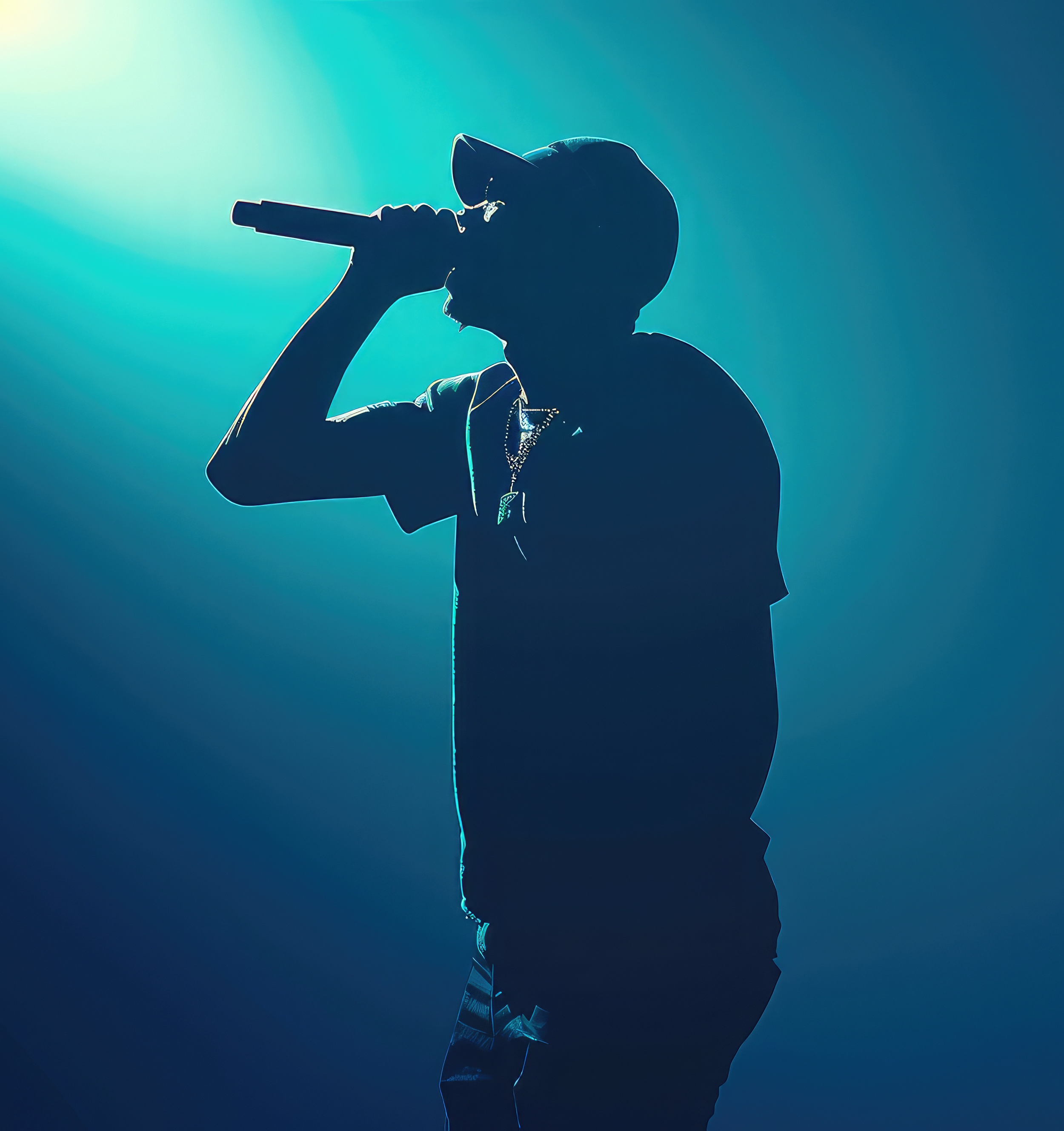
There's an artist out there right now with 80,000 monthly Spotify listeners, a Discord server with 12,000 members who treat every new drop like a cultural event, a merch line that sells out in hours, and a touring schedule that keeps them profitable year-round. You've probably never heard of them. And by the old rules of hip-hop success, that would mean they “hadn't made it.”
By the new rules, they're exactly where they want to be.
What We Mean by Hyper Niche
The hyper niche creative isn't defined by obscurity. Plenty of artists have small audiences because their music simply hasn't connected. That's not what we're talking about. The hyper niche creative has a small audience by design, or at least by nature: a concentrated, almost tribal fanbase that doesn't just stream their music but organizes around it. They show up to every show. They run the fan accounts. They argue passionately in comment sections on behalf of an artist most of their friends have never heard of. They are, in the language of Kevin Kelly's famous essay, more than just fans. They are the thousand true believers who make a career not just possible but sustainable.
This is a meaningfully different relationship than the one the Big Four had with their audiences. Kendrick Lamar’s fanbase is enormous and diffuse. It spans continents, demographics, casual listeners, and people who only know three songs. That breadth was the point, and it was exactly what the infrastructure of discovery and distribution was optimized to produce. The hyper niche creative operates on the opposite logic. Depth over breadth. A smaller room, but everyone in it knows every word.
The Pattern Looks Like This
Take someone like Yeat, who built a cult following through SoundCloud and TikTok before labels came calling, his fanbase developing almost its own internal language around his music before the mainstream caught a whiff. Or Lil Tecca, whose "Ransom" went viral in 2019 largely through playlist placement and organic streaming before any traditional radio push. Or the entire wave of artists orbiting the internet rap ecosystem (Zack Fox, ZillaKami, Crypt) who maintain intensely loyal audiences that might never crack a Billboard chart but sustain real, durable careers through merchandise, live shows, and direct fan relationships built on platforms the Big Four never needed to think about.
The pattern isn't genre-specific. It shows up in drill, in hyperpop-adjacent rap, in lo-fi bedroom rap, in Christian hip-hop, in Latin trap, in a dozen regional micro-scenes that coexist without any single one dominating. What they share isn't a sound. It's a structure: community first, catalog second, mainstream validation optional.
Community Became the New Radio
In Part II, we talked about radio as the kingmaker, the mechanism that decided who got heard and at what scale. In Part III, we watched that mechanism get dismantled piece by piece. What replaced it wasn't another centralized system. It was community itself: Discord servers, Reddit threads, Twitch streams, TikTok comment sections, group chats, fan-run YouTube channels that rack up millions of views without a label sending a single pitch.
This shift has real economic consequences. An artist with 50,000 deeply invested fans can generate more revenue per listener than an artist with 5 million passive ones. Merchandise margins beat streaming royalties by a factor that would make any label executive uncomfortable if they sat with it long enough. Direct-to-fan platforms like Bandcamp, Patreon, and even OnlyFans have proven that the middle of the market, the space between indie obscurity and superstar scale, is not just viable but genuinely lucrative for artists who know how to cultivate it.
The Big Four model needed massive scale because it was built on low-margin, high-volume revenue streams. Radio play generates pennies. Album sales at retail split too many ways before they reached the artist. The new model doesn't need scale in the same way because the revenue per fan, when the relationship is direct and deeply invested, is fundamentally different.
The Industry Is Still Catching Up
Major labels haven't disappeared, and they're not going to. What's changed is their leverage. For most of the Big Four era, a label deal was the only realistic path to the kind of reach that translated into lasting cultural impact. Now it's one path among several, and for a growing number of artists, not even the most attractive one. Labels are increasingly functioning less as gatekeepers and more as service providers, offering distribution, marketing infrastructure, and advance capital to artists who have already proven themselves in the independent ecosystem (see LaRussell).
That's a quiet but seismic shift. It means the artists with the most negotiating power are often the ones who built audiences without label support first, which inverts the entire logic of how the industry used to work. You no longer audition for the system. The system auditions for you.
What This Means for Hip-Hop
Now, here's something nobody wants to say out loud: hip-hop was never as unified as the Big Four mythology suggests. That unity was a product of limited channels, not genuine consensus. When three radio conglomerates controlled what you heard and four major labels controlled who got signed, of course the culture appeared to speak with one voice. It didn't have another option.
What we're calling fragmentation is really just visibility. Thousands of scenes, sounds, and communities that always existed, finally able to be seen and heard without asking anyone's permission. That's not erosion. That's the culture operating closer to its actual nature than it ever could under the old infrastructure.
And nothing makes that clearer than what's happened with women in hip-hop. The Big Four framework, across all three eras, was almost entirely male by default. Not because female MCs lacked talent. Lauryn Hill, Missy Elliott, and Foxy Brown were operating at the highest level during the '90s Big Four era and still couldn't crack that inner circle. The system wasn't built to hold them there. It was built to produce a certain kind of star, and that kind of star looked a specific way.
The hyper niche era broke that mold. Cardi B, Doechii, Meg The Stallion, to name a few, aren't artists who slipped through a crack in the system. They built audiences the system couldn't have manufactured for them, on platforms the old gatekeepers don't control, with fanbases that are deeply, almost personally invested. The next iteration of the Big Four, if such a thing even exists, will almost certainly look nothing like the last three. More women. More regional diversity. More genre fluidity. Not because the industry finally decided to be inclusive, but because the infrastructure that enforced exclusivity is no longer the only game in play.
So no, this isn't fragmentation. It's correction. Hip-hop traded the illusion of a unified center for something messier, louder, and considerably more honest. That trade was always worth making. We just needed the technology to catch up before we could make it.
The Big Four gave us a canon. The hyper niche era gives us the full conversation that canon was always editing out.
This concludes The Death of the Big Four, a four-part series on the origins, infrastructure, disruption, and evolution of hip-hop's most enduring cultural pattern.