
Performative Politics: The Brand Strategy Every Campaign Runs (and Every Voter Should See Through)
Every election cycle, somebody in a campaign war room greenlights a decision that makes for a great fifteen-second clip and absolutely nothing else. A candidate shows up at a barbershop they've never been to. A celebrity posts an endorsement, sometimes within the same news cycle as the ask. A politician tries to use slang they clearly learned that morning, and the internet turns it into a highlight reel before lunch. We watch it happen every single cycle, we roll our eyes, and then, enough of you fall for a version of it anyway. That's not a coincidence. That's a brand strategy working exactly as designed.
As a culture marketer, I’m now spending my career studying the gap between what a brand says it is and what people actually believe it is. Politics runs the same playbook, just with worse production value and higher stakes. A campaign is a brand. A candidate is a product. And every election cycle, that product gets marketed to us using the tactics a sneaker company uses to sell a colorway: borrowed credibility, cultural fluency, aspirational messaging, and a promise that's easier to make than it is to keep. The difference is that when a sneaker brand oversells you, you're out a hundred and twenty dollars. When a campaign oversells you, you're out two years of policy.
The Performance Is the Point
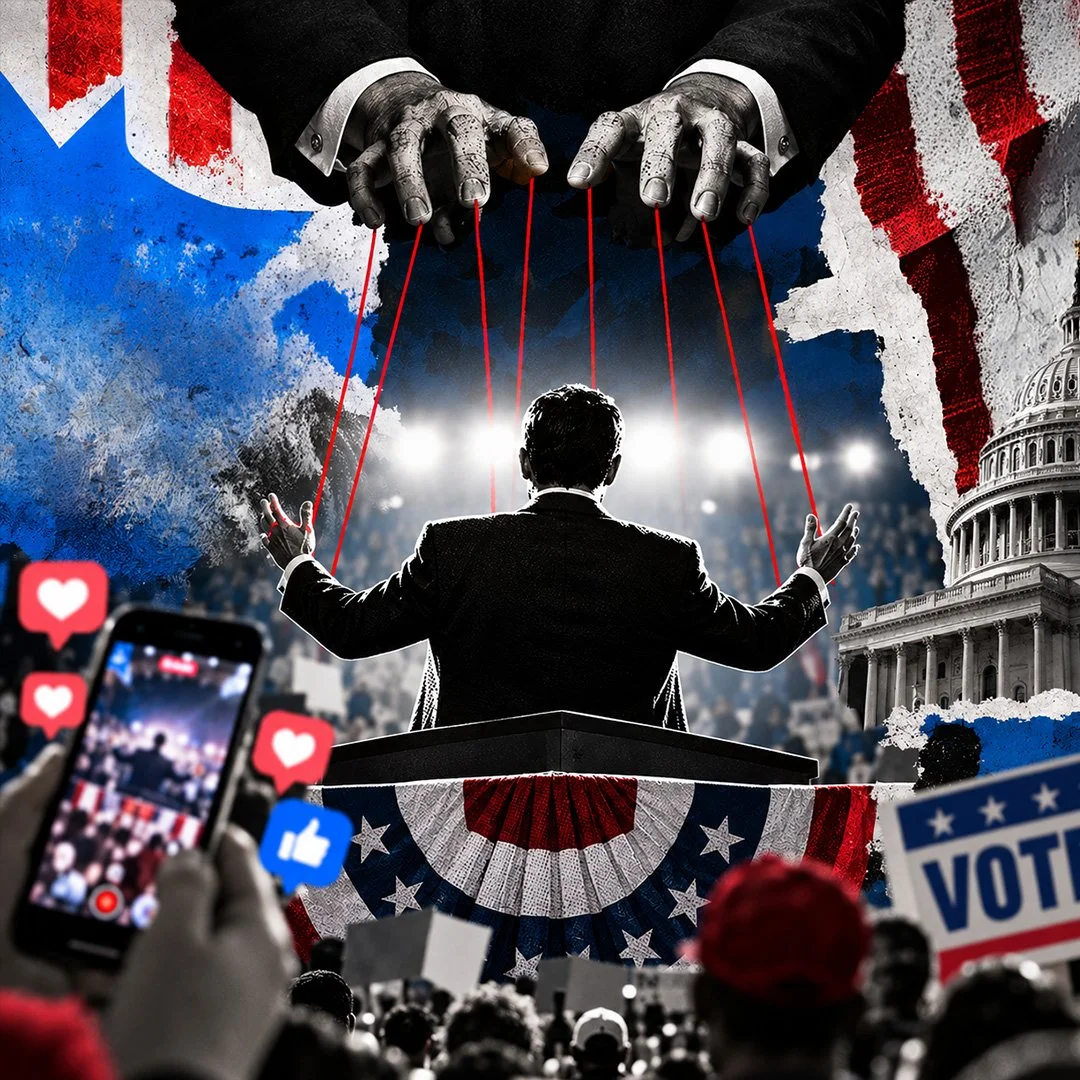
Here's the uncomfortable part: performative politics isn't a bug in the system. It's the system working correctly, for whoever's running it. A rally with a surprise celebrity guest isn't there to inform you. It's there to associate a candidate with an emotion you already have (admiration, nostalgia, trust) and let that emotion do the persuading before your brain gets a vote. A politician saying "no cap" across social media isn't trying to communicate. They're trying to signal I speak your language, whether or not that's remotely true. This is Marketing 101, and it works on candidates for the same reason it works on protein bars: borrowed relevance is cheaper and faster than earned relevance, and most people don't have the bandwidth to check the receipts before forming an opinion.
None of that makes performance automatically bad, for what it's worth. Symbolism has real power, and a genuine cultural connection isn't the same thing as a manufactured one. The problem isn't that politics performs. It's that most of us have never been taught to tell the difference between a performance that reflects something real and one that's just well produced. That skill, spotting the gap between the show and the substance, is exactly what this series is built to sharpen, four ways, heading into a midterm election that deserves more scrutiny than most of us are currently giving it.
Four Ways We Get Sold
Celebrity Endorsements and Proximity to Power: When an artist, athlete, or influencer shows up next to a candidate, what's actually being transferred: trust, relevance, votes, or just optics dressed up as substance? There's real research behind this one. A widely cited Kellogg School study on Oprah Winfrey's 2008 endorsement of Barack Obama found it was worth roughly a million additional votes in the Democratic primary, in a race decided by a margin far smaller than that. We'll dig into why proximity gets mistaken for endorsement, why endorsement gets mistaken for alignment, and why the celebrity almost never bears any of the cost when that alignment turns out to be fiction.
Social Media's Role in Influencing Elections: This one runs underneath the whole series rather than sitting off to the side, because nearly every performative moment worth analyzing now lives and dies on a platform built to reward whichever version of a message spreads fastest, not the version that's most accurate. Pew Research found that nearly half of U.S. adults under 30 now name social media as their primary source of election news, more than double the share of adults thirty to forty-nine. We'll get into how the algorithm doesn't just cover the performance anymore. It's actively shaping which performances get made in the first place.
Cringe Political Pandering: The barbershop visit. The slang that landed a decade after it was relevant. The playlist a staffer built in twenty minutes. We'll look at why pandering so reliably backfires, why campaigns keep doing it anyway, and what it reveals about how little some campaigns actually understand the communities they're courting versus how much they simply want that community's attention.
Campaign Promises vs. the Follow-Through: This is the piece where the performance either gets vindicated or gets exposed, because a promise made on a stage is free and a promise kept in office costs something. Nonpartisan fact-checking outlets have tracked this across the last four presidents: promise-keeping rates that have ranged from roughly a fifth to under half of what was pledged, regardless of party. We'll build a framework for separating a candidate's actual record from the applause line that got them elected, which turns out to be a genuinely useful skill no matter who's on your ballot.
Why This Matters Heading Into the Midterms
None of this is an argument for any candidate, party, or policy position. That's not the lane this series is in, and it's not Kulur's lane either. It's an argument for treating political messaging the way we'd tell any client to treat a competitor's marketing claim: with enough literacy to separate the pitch from the product. That distinction matters more in a midterm year, not less, because midterms don't come with a presidential race's spotlight or turnout. Every House seat, over a third of the Senate, and dozens of governorships are decided by whoever actually shows up, and performative politics is engineered to work best on exactly the people who are paying the least attention.
A voter who can spot a borrowed-relevance play for what it is isn't a cynic. They're just someone who reads the ingredients label before buying the product. Over the next four pieces, that's the literacy we're building, one performance at a time.