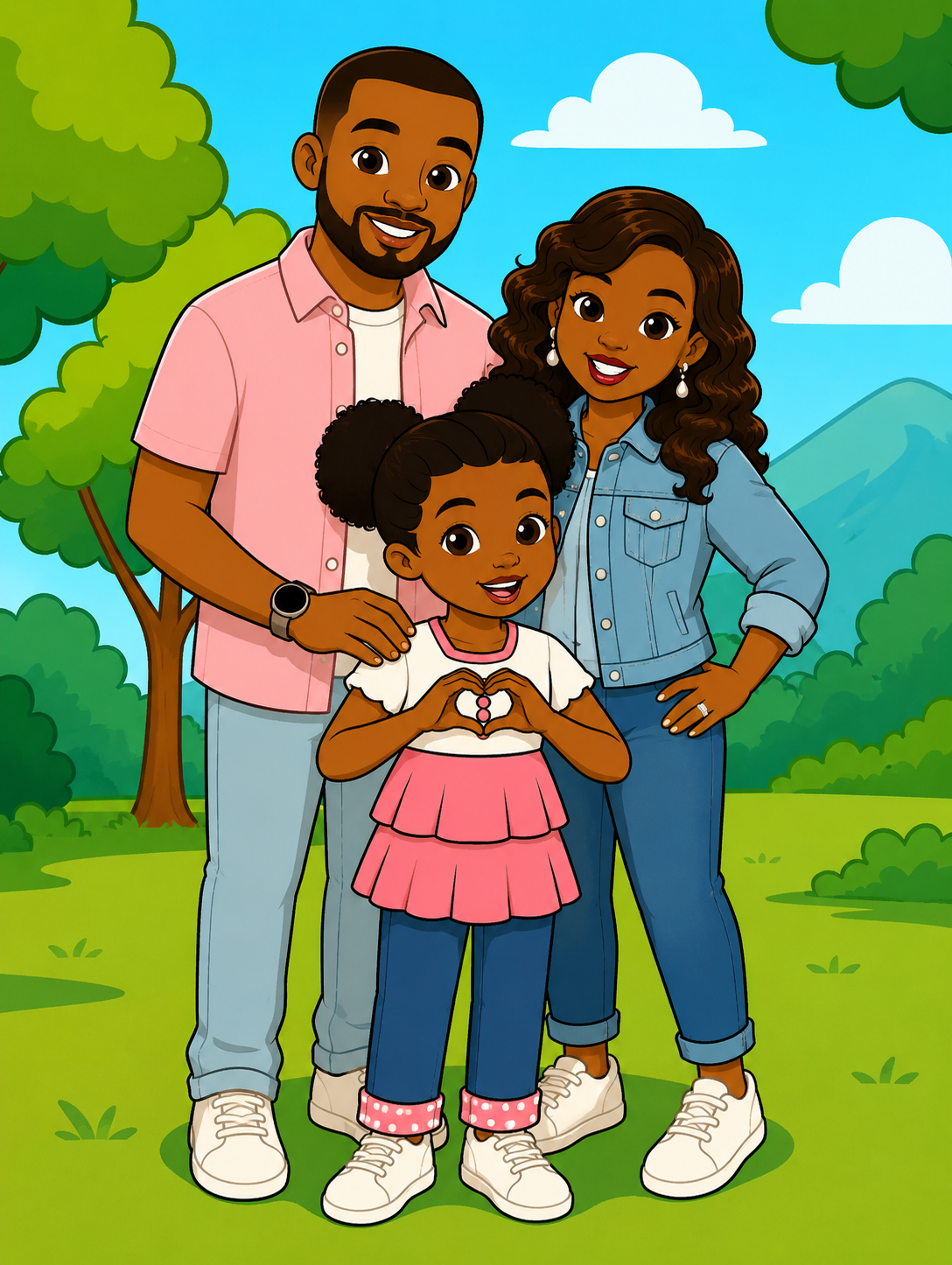
Gracie's Corner but with perspective
A little girl singing her ABCs in a living room became a Disney+ show. Her family still owns it. If you don't immediately understand why that second sentence matters more than the first, this piece is for you.
Rahtina and Caleb Roderique own Gracie's Corner outright. No network. No studio. No middleman holding the masters or the reins. Every licensing deal, every streaming partnership, every merchandise line, every book advance flows back to the family. That's not an accident. That's architecture with intention behind every piece.
Most of us grew up watching people who looked like us perform, create, and build things the whole world loved. We likely just never noticed who owned it. The artist was famous. The label was wealthy. The athlete was celebrated. The league was a business. We saw the talent. We didn't always see the structure around it, or who built it, or who it was built for.
Gracie's Corner is now on Disney+. But it's clearly not a Disney show. The Roderique family did not sign their daughter's likeness, their characters, or their brand over to one of the most powerful entertainment companies in the world. They struck a distribution deal. Disney gets the reach. The family keeps the rights. A distribution deal grants a platform the right to carry your content, it does not transfer the underlying IP, the brand marks, or the revenue streams attached to them. Previous generations of Black creators didn't lose their work because they lacked talent. They lost it because the deals they signed conflated distribution with ownership. The Roderiques knew the difference before they signed anything.
Real estate, stocks, and business ownership are the lanes everybody knows. But Gracie's Corner opens up a fourth lane our community has been sitting on without fully recognizing it: content IP built on authentic cultural expression. The Roderique family didn't chase what the algorithm was rewarding that week. They monetized what was already alive in their house, their daughter's joy, their culture, their story.
Content IP is its own asset class, and it works differently than the others. Real estate and stocks rise and fall with markets you can't control. A business usually needs you in the room to run. But content IP, when you own it outright, compounds on cultural relevance instead of market cycles. Once the asset exists, it can generate revenue without you having to do anything else. Yes, there are real risks: platforms change, algorithms shift, cultural moments fade. But a brand built on something authentic doesn't follow the stock market. It follows attention. And if you're paying attention to my generation, you already know that attention is everything.
Most of us were taught that generational wealth means leaving money behind. A savings account. A house. Something with a number attached to it. But what the Roderique family is building goes deeper than that, it's infrastructure. A brand. A platform. An IP catalog that keeps producing without anyone needing to clock in. Gracie doesn't have to perform for Gracie's Corner to keep working. The songs still stream. The merch still sells. The licensing deals still pay out. That's not a coincidence, that's what it looks like when ownership is structured right from day one.
Money is a snapshot. Infrastructure is a film and money captures a moment of what you earned, what you saved, and what you left behind. Infrastructure keeps running the story long after you've stepped away. One depletes. The other compounds and that difference is everything, and it's also the one many families never get a chance to make.
What actually makes this worth studying is that it's replicable. Not the exact business but the principle behind it. Find something authentic that already lives in your world. Build a structure around it before someone else offers to do it for you. Hold ownership at every decision point that matters. The family running the community event series. The pastor whose sermons could become a curriculum. The chef whose recipes could become a product line. The coach whose method could become a certification. Same architecture. Different expression. The asset is already there in your home, your community, your culture. The only question is who builds the structure around it. And who owns it when it starts to produce.
The Roderique family made a creative decision, an entrepreneurial decision, and a legal decision simultaneously. Parenting, for them, became legacy planning. And they started before they had any idea how big it would get.
The next Gracie's Corner is already in your house. The question isn't whether the gift is there, because it is. The question is whether you're building a structure around it before someone else offers to do it for you and takes the rights in the process. The Roderique family just wanted to capture a moment, but ended up building something that outlasts it. That's the whole lesson. Don't just record the gift, own what you build around it.