
Cringe Political Pandering: Why the Try-Hard Move Almost Always Backfires
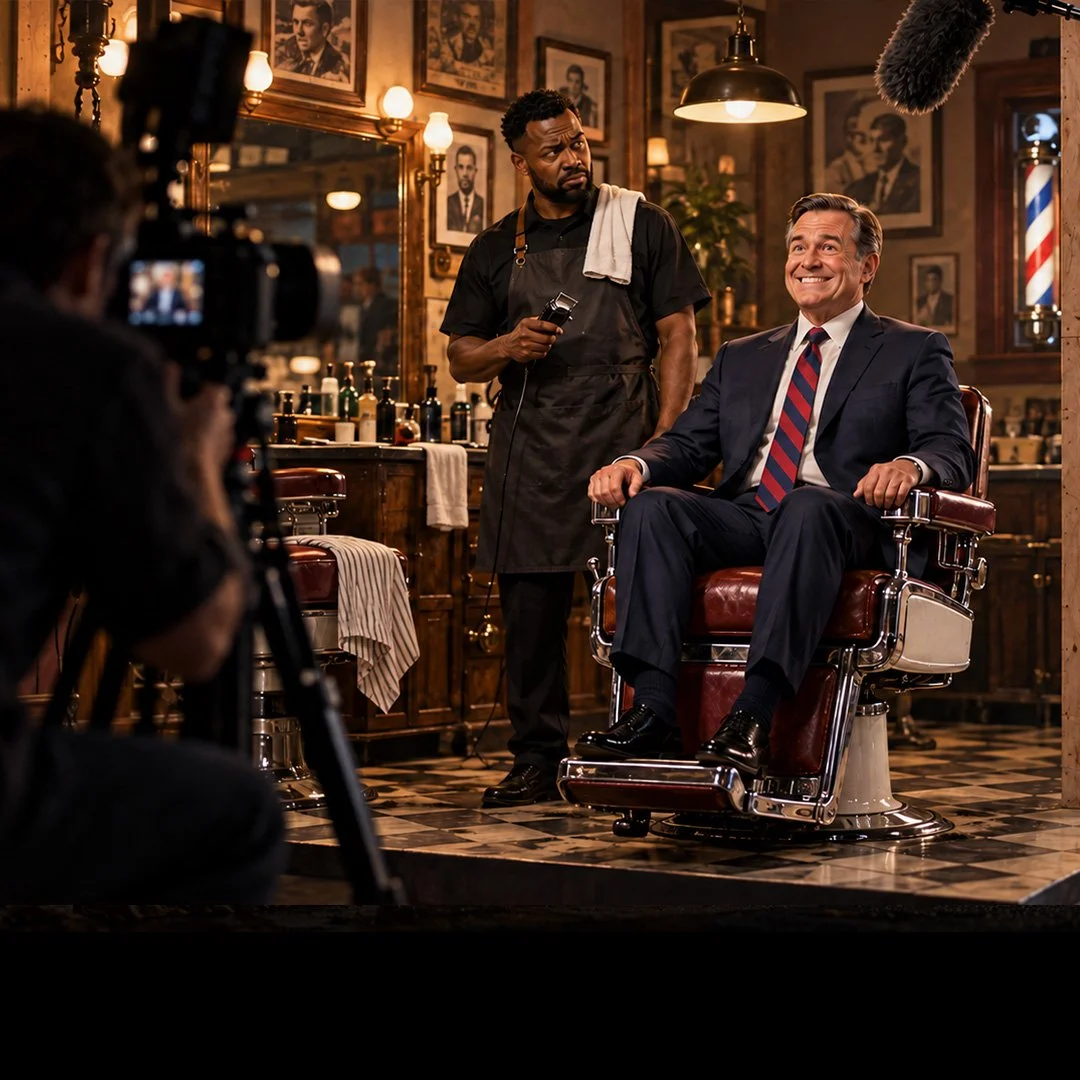
Every election cycle produces the same photo: a candidate standing in a barbershop or beauty salon chair they clearly did not choose, hair unchanged, expression somewhere between hostage and enthusiast. It is the visual shorthand for a category of political performance we all recognize on sight and almost never enjoy watching: pandering. Not the policy kind, where a candidate promises something too good to be true and lets voters do the math later. The cultural kind, where a campaign decides the fastest path to a demographic's heart is to borrow its language, its music, or its aesthetic, badly, and hope nobody notices the seams.
Somebody usually notices the seams.
The Anatomy of Cringe
Cringe pandering works on a simple idea: that cultural fluency can be faked convincingly enough to move votes. The theory keeps failing for a structural reason. A community that has spent decades being stereotyped, mimicked, and commodified by outsiders develops a finely tuned radar for the difference between someone who belongs and someone who studied for the test. When a campaign staffer builds a candidate a rap verse, a slang-heavy tweet, or a barbershop stop the week before an election, the audience being courted usually clocks the timing before they clock the message. The tell is rarely the content. It is the absence of any relationship to that culture before the polling made it useful.
This is a close cousin of the policy pandering that shows up every election season, where candidates compete to promise the most without explaining who pays for them. Both versions rely on the same bet: that the emotional appeal will land before anyone checks the receipts. Cultural pandering just moves faster, because a cringe clip travels the internet in hours, while a bad policy promise can take years to fully unravel.
A Bipartisan Hall of Fame
Nobody has a monopoly on this. In 2015, Ben Carson's presidential campaign spent $150,000 on a radio rap ad called "Freedom," airing it across urban stations in eight cities to court young Black voters. It aired for two weeks and was mocked for roughly the rest of the campaign. In 2023, Vivek Ramaswamy revived his college freestyle rap persona, "Da Vek," on Fox & Friends, in a moment that outlets on both sides had mixed reactions to, even as his campaign called it evidence of a candidate having fun and connecting with young voters.
Democrats have their own entries. In 2024, then-Vice President Kamala Harris appeared in a taped BET Awards cameo using African American Vernacular English, and conservative outlets reported the backlash with Tesla and SpaceX CEO Elon Musk, calling it "toenail curling level of cringe." A few weeks later, Megan Thee Stallion performed at a Harris rally in Atlanta, declaring "Hotties for Harris" to a crowd of thousands, a moment that drew criticism from both directions at once: some Democrats called the spectacle performative, while Republican commentator Matt Walsh mocked his own side for being unable to match it, warning conservatives not to counter with "washed up or obscure entertainers that nobody cares about."
The Midterm-Cycle Case Study
The clearest recent example involves Nicki Minaj. A rap icon whose cultural credentials nobody disputes, she has spent the past year moving closer to the Trump administration, from a surprise December appearance at Turning Point USA’s AmericaFest to a role judging the administration’s small-business pitch competition. In late September, she sat down with Lara Trump on Fox News urging younger voters to, “Please, and vote red now,” and called the president “very authentic.” Minaj and her supporters describe a sincere alliance, and she has said she has nothing to say to critics. Critics, including the Daily Beast, focused on the messenger: she is reported to be a permanent resident rather than a citizen, so she cannot cast the vote she urged young Americans to cast. The irony.
What Authenticity Actually Looks Like
Two cases, one from each side, show the sequencing that separates genuine connection from manufactured. Los Tres de la Habana, a Cuban American band in Miami, wrote and recorded “Por Trump” as a salsa tribute in 2020, unpaid and uncommissioned. It went viral on its own, and only then did the Trump campaign license it for ads, eventually inviting the band to perform at the 2025 inaugural gala. Four years later, Charli XCX tweeted “kamala IS brat” within hours of Joe Biden’s endorsement of Kamala Harris, after fan edits pairing Harris clips with her songs had circulated for weeks. The campaign’s account then adopted the album’s lime green, a move TIME speculated was driven by savvy staffers. In both cases, the sequencing is key in understanding authenticity: the community made it, and the campaign showed up after the fact. Or, said differently: culture first, campaign second. This is the single clearest test for telling a genuine cultural connection from a manufactured one.
Why This Matters for the Midterms
Let me be clear: none of this is an argument for any candidate, party, or position. It is an argument for a specific piece of literacy: learning to ask who made this moment, and why, before deciding what it says about the candidate behind it. Down-ballot midterm races rarely get the scrutiny presidential campaigns do, which means a cringe-pandering moment at a state or congressional level can slide by with even less friction. A voter who can spot the seams, the borrowed slang, the photo-op haircut, the honor handed out one news cycle before an election, is a voter who is harder to sell a performance instead of a platform. That skill does not require picking a side. It just requires paying closer attention than the pander is counting on.